

Imagine a path that does not just connect two banks of a canyon, but unites six centuries of uninterrupted history. At the edge of the mighty Apurimac River, the wind carries the scent of fresh ichu grass and the sound of a tradition that refuses to fade. Here, where engineering blends with faith, swings the Qeshuachaca Inca Bridge, the last living relic of the vast Qhapaq Ñan road network.
Crossing this bridge is much more than an adventure activity; it is a sensory journey into the heart of the Tawantinsuyu. Every braided fiber of this Cusco rope bridge tells the story of four communities that, year after year, rebuild their identity. In this guide, you will discover why the Qeswachaka experience is the hidden gem of non-traditional tours in Cusco and how you can be part of this intangible legacy. Get ready to discover the best-kept secret of the Andes.
Qeswachaka Bridge: Inca Engineering Defying Time
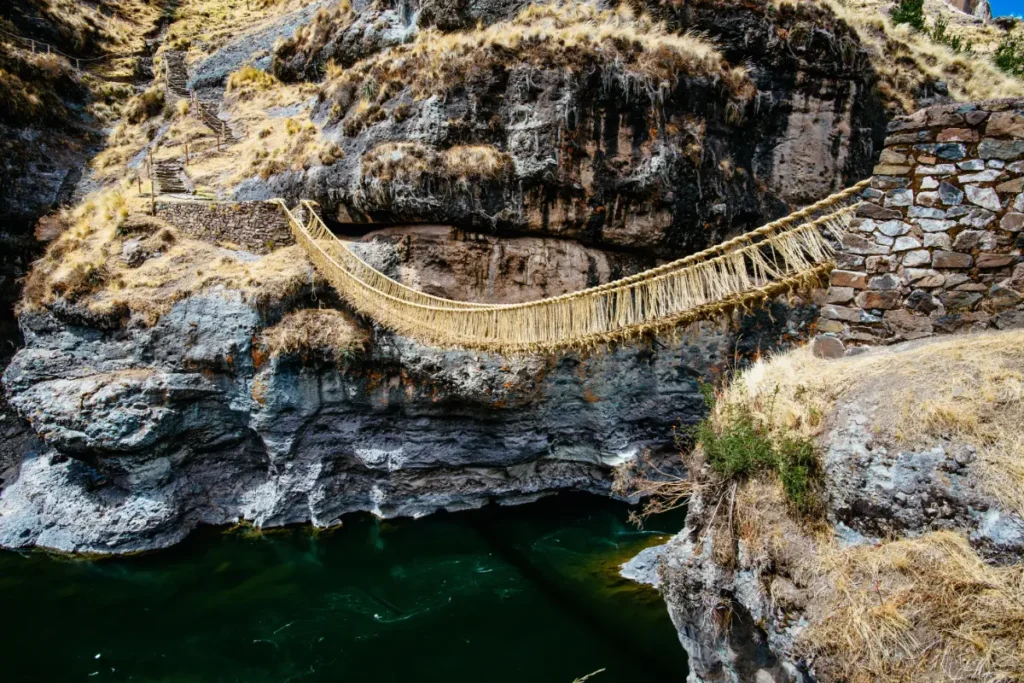
The origin of this monument dates back to the expansion of the Inca Empire. While the rest of the empire’s vegetable fiber bridges were replaced by metal and cement structures during colonial and modern times, the Qeswachaka Bridge remained standing thanks to the devotion of the inhabitants of the Quehue Cusco district.
This is not a simple construction; it is a masterpiece of Inca rope bridge engineering. The bridge is held together entirely by the manual braiding technique of ichu fibers (Andean straw), a knowledge passed down from generation to generation. Its cultural relevance is so deep that it has been declared a UNESCO Intangible Cultural Heritage of Humanity.
Traveler Tip: If you look closely at the main ropes or “duros,” you will see they are composed of thousands of small braids. Each family in Quehue is responsible for a section, symbolizing the Andean community unity known as Ayllu.
4-Lagoon Circuit & Qeswachaka: The Soul of Canas, Cusco
Many travelers wonder what to do in Canas, Cusco besides visiting the bridge. The answer lies in an unparalleled scenic route: the 4-Lagoon Circuit and Qeswachaka. Before reaching the main destination, the road rewards us with crystal-clear mirrors of water: Pomacanchi, Acopia, Asnaqocha, and Pampamarca.
This journey is ideal for those seeking cultural tours in Cusco that combine nature and tradition. Around these lagoons, life moves at a different pace; you will see Andean flamingos and local communities dedicated to agriculture. It is the perfect preamble to reaching Quehue, Cusco, where the landscape becomes more dramatic and the Apurimac canyon opens to reveal the last link of pre-Columbian engineering.
This route is typically integrated into the popular Qeswachaka Full Day tour, a day-long excursion that allows you to disconnect from the city. It is a refreshing alternative to crowded routes, allowing for a more intimate connection with the environment—a hallmark of the premium services offered by Aura Andina Travel.
The Qeswachaka Ceremony: A Ritual of Renewal
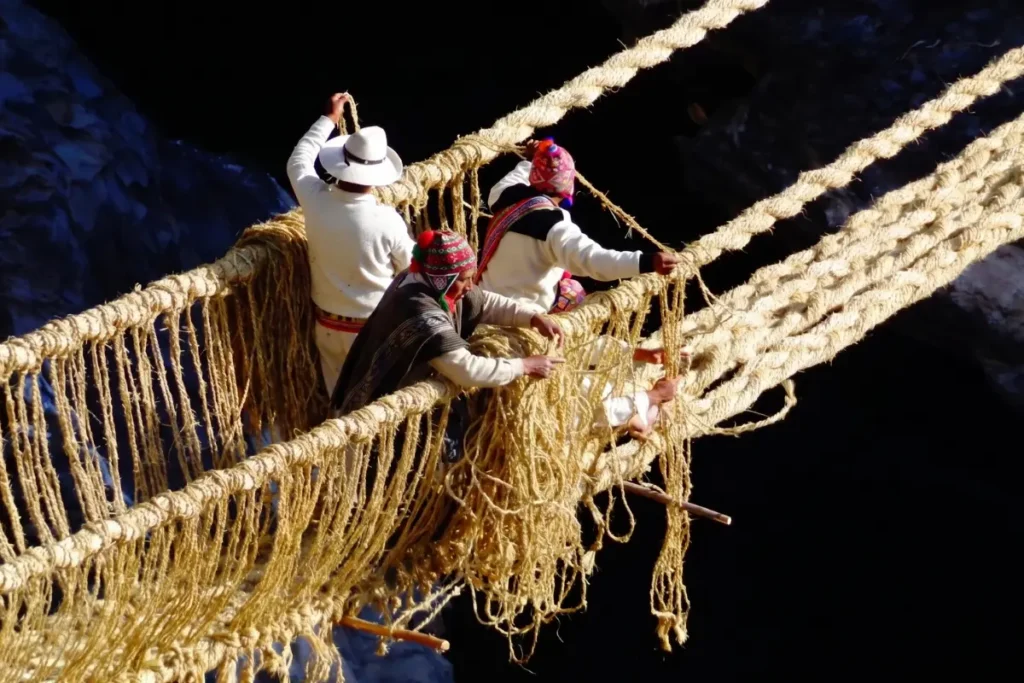
If you are lucky enough to plan your trip for the second Sunday in June, you can witness the Qeswachaka Ceremony. For three days, the communities of Huinchiri, Chaupibanda, Ccollana Quehue, and Choccayhua cut the old bridge and weave a new one.
This event is the heart of the Qeswachaka World Heritage status. It is a spectacle of faith and collective work. Seeing the men hanging over the abyss braiding the new ichu bridge while the women weave the railings at the top provides some of the most striking Qeswachaka bridge photos you can capture. The ritual culminates in a great festival of indigenous dances celebrating the victory of tradition over oblivion.
Important Note: Due to the high demand during the ceremony, it is recommended to book your Qeswachaka Tour months in advance. At Aura Andina Travel, we ensure that even during these festive dates, your experience maintains our signature standard of exclusivity.
Cusco 2026 Travel Guide: Essential Tips
To make your adventure perfect, we have prepared this technical guide based on our expertise as leading local operators in the region.
How to get to Qeswachaka from Cusco?
The distance from Cusco to Qeswachaka is approximately 180 km (3.5 to 4 hours of travel). You have two options:
- Public Transport: Take a bus to Sicuani, then a collective taxi to El Descanso, and finally a taxi to Quehue. This is a long and tiring option.
- Private or Shared Tour: The most recommended option for comfort and safety. A Qeswachaka Full Day includes private transport, a specialized guide, and meals.
Best Time to Visit Qeswachaka
While the bridge can be visited year-round, the best time to visit Qeswachaka is during the dry season (April to October). However, June is the stellar month due to the annual renewal.
Comparison Table: 2026 Visit Options
| Feature | Full Day Tour | Solo Travel |
| Travel Time | Optimized (Private transport) | 5-6 hours (multiple transfers) |
| Specialized Guide | Included (Deep cultural insight) | Not available |
| Experience Type | Private & Exclusive | General / Public |
| Meals | Breakfast & Buffet Lunch included | At traveler’s own expense |
| Price | Consult Qeswachaka tour price | Variable |
What to bring?
- Warm clothing (Cusco weather can be unpredictable).
- Sunscreen and a hat (radiation is strong at 3,700 m.a.s.l.).
- A camera for the best Qeswachaka bridge photos.
Safety at the Qeswachaka Bridge
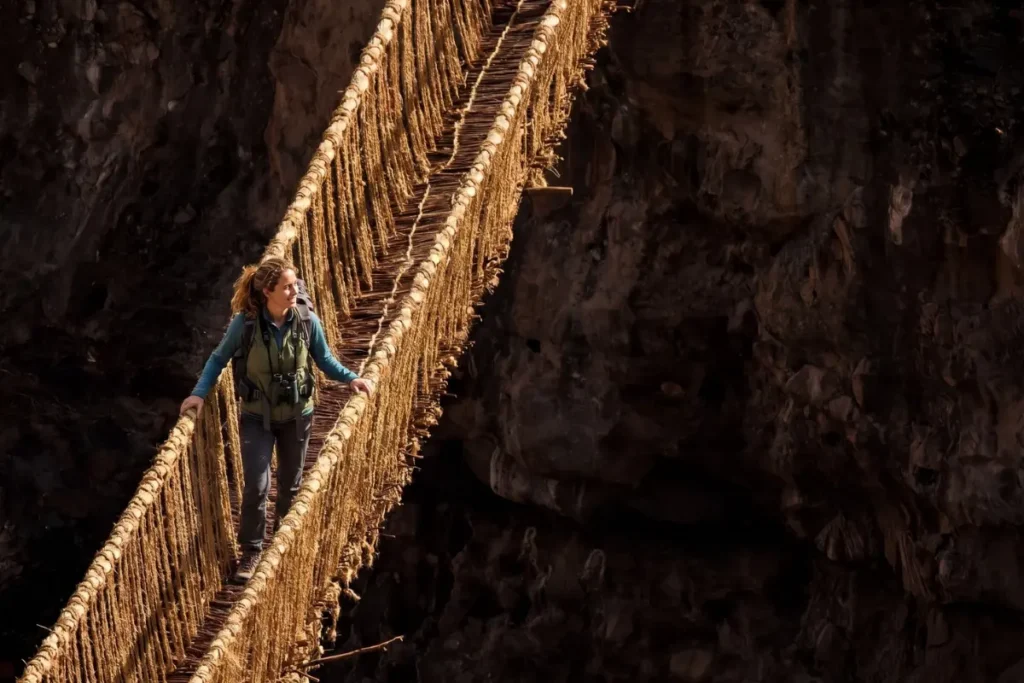
A major concern is safety at the Qeswachaka bridge. Although made of straw, its strength is astonishing. For peace of mind, the local communities perform constant maintenance, and your guides will provide exact instructions for a safe crossing.
Conclusion: The Heartbeat of the Andes Awaits
The Qeswachaka Inca Bridge is a reminder that the past is not something left in books, but something you walk and breathe. It is the opportunity to step on the same straw that the Inca messengers stepped on.
Peru is a destination of infinite contrasts, and Qeswachaka represents the most authentic and spiritual side of our land. Do not just hear about it; experience the last Inca bridge with the security and knowledge of those who love and respect every corner of Cusco.
Ready to cross into history?


